2026-04-01
I Was Coding Backprop by Hand in 2018 — Here's What It Taught Me About AI in 2026
2018: When Nobody Was Talking About GPT
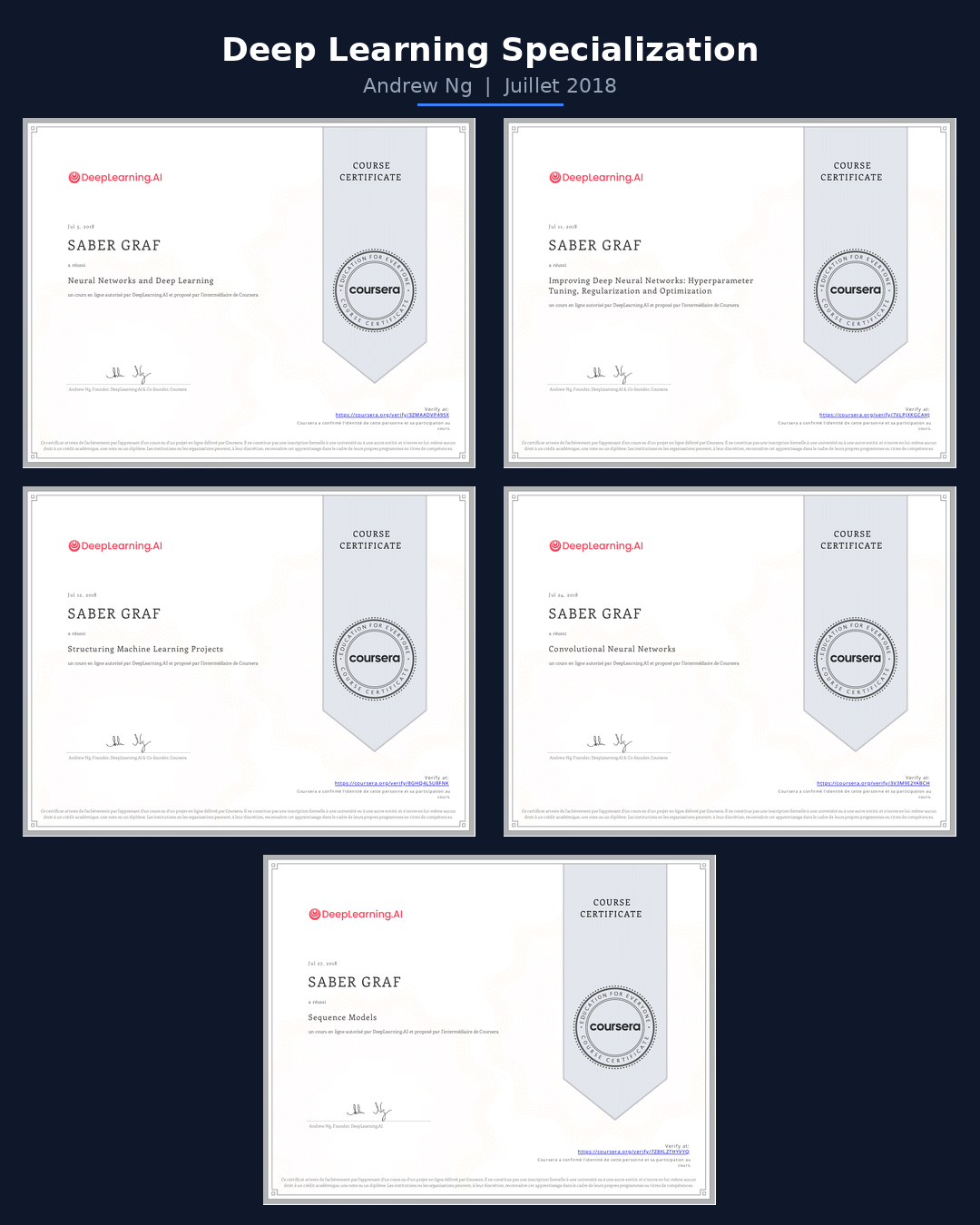
In 2018, I had been a data scientist for 4 years, specializing in signal processing for neuroscience research. That year, I decided to dive deep into deep learning with Andrew Ng's specialization on Coursera.
Neural Networks. CNNs. Sequence Models. Hyperparameter tuning. 5 courses, 5 certificates. Countless evenings debugging vanishing gradients and training models on my GPU.
Why? Because I could feel these tools were about to transform how I analyzed neural signals.
The State of the Art Back Then
To appreciate how far we've come, here's what defined the landscape in 2018:
- ResNet for computer vision
- LSTMs for sequential data
- Transfer learning was only beginning to gain traction
- GPT-1 had just been released... to widespread indifference
No agents, no prompt engineering, no ChatGPT. Deep learning was still a field for specialists coding their architectures from scratch.
8 Years Later: A Completely Different World
In 2026, Transformers have swept everything aside. We no longer code architectures from scratch — we orchestrate agents that reason and use tools. Prompt engineering has replaced feature engineering. Generative AI has moved from the lab to the CEO's boardroom.
The speed of transformation is staggering. But the fundamentals haven't changed.
What 2018 Taught Me That Still Holds True in 2026
Understanding the Fundamentals Makes All the Difference
Those who know what's "under the hood" make better decisions, even when using APIs. Understanding how a neural network works, grasping gradient descent, knowing the biases of a model — that knowledge is a lasting advantage.
Curiosity Beats Static Expertise
Pharmacy, neuroscience, data science, deep learning, generative AI. This wasn't an accident. It's a stacking strategy: each skill acquired enriches the next. In a field that evolves as fast as AI, the ability to learn is more valuable than any point-in-time expertise.
The Best Time to Upskill Was Yesterday
The second best time is now. Companies that wait for AI to be "mature" before paying attention are falling behind every day.
12 Years of Data Science, and It's Only the Beginning
Today, after 12 years in data science, I help SMEs and biotech/pharma startups adopt AI. And every day, I'm grateful to that 2018 data scientist who decided to take the plunge.
Wondering how AI could transform your processes? Book a free 30-minute discovery call to discuss it. No strings attached.